
Data Leak Protection (DLP)
is the name of several policies in Office 365, setting up what data can, and can’t be, shared and with whom.
Imagine being able to automatically identify private information like passport numbers, Health IDs or bank account details and make sure that those are only being shared with people that are authorised to see them.
The good news is that you can do this with 365, provided you turn on the policies and set them up correctly, and monitor when data is shared.
Under the NZ Privacy Act, we’re all expected to take care of personal data entrusted to us and to make sure it’s only used for the purpose for which is being obtained.
With Office 365, there’s no excuse for that to be breached provided that we understand what data should be kept, what might be kept incorrectly, and how its being shared. With this we can set up rules to monitor your Office 365 system and report on how records are shared.
We include a basic set up of DLP in our KARE for Security S2 plan to get you started.


Is automated Microsoft patching enough?
Microsoft have been releasing patches for 30 years. It’s easy to become blasé about them. Yes, Microsoft can automatically apply updates to Windows and Office. But that does not mean that you can rely on it. Any system is only as good as how well it is monitored....

Beware of “Pig-Butchering” – a new trend in Social Engineering
Where do these names come from? The latest trend is referred to as Pig-Butchering. The name comes from the Chinese underworld (shāzhūpán). The term refers to fattening up a pig, taking a longer-term view. They develop their target slowly, looking to get maximum...
What does the LastPass breach mean for you?
There have recently been a couple of well-publicised breaches of LastPass. Most people will be familiar with LastPass but in case you are not, it’s a well-known and popular password vault/manager.Does this mean you shouldn’t use a password vault? Absolutely not. YOU...
Are you making the most of your password manager?
Passwords are the basic protection for our various online accounts. It amazes me how basic some people’s passwords are. Passwords like, well ‘password’ or ‘123456’ are still commonly in use! In case that sounds unbelievable, here’s a list of the top 200 for...
Kinetics KARE clients – we’ve just added a layer of security
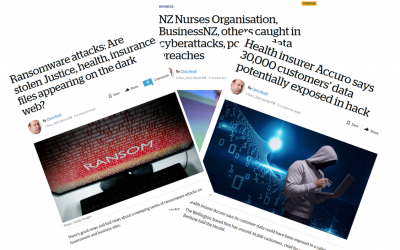
With the latest news of yet another local New Zealand high-profile cyber attack, it must be obvious that cyber-threats are real. EVERYONE is at risk of cyber attack! This latest incident is particularly close to home for me, because I chair the board of one of the...

Multifactor Authentication (MFA) gets even more secure!
Microsoft are making their authenticator even safer! Most of us will have experienced random pop-ups on authenticator asking us to approve access to our systems. We will have wondered what triggered it. Is it a hacker? Now we'll be able to get more information. Your...

Is your cyber-insurer testing your business?
Over the last month, we’d heard about this happening in the US and now it seems to be happening in NZ as well. Cyber insurers are working hard to mitigate their risk and that includes stepping up their testing of their clients. Right now, that appears to be more...

Is public WiFi safe?
Free public WiFi can be tempting.Whether it is in cafe, an airport or a shopping centre, free Wi-Fi is very tempting. Who wouldn’t want faster data, without the cost. But, as with anything that is free, be very careful! It is very easy to become a victim of something...
What can you expect if you get crypto-locked?
!Right now, there’s a crypto-locked server in the lab in our Kinetics Auckland Office. It’s not from one of our clients, but a business that’s come to us, after the event, asking for help. We are busy rebuilding it and restoring the data and configuration to the...

Are you meeting the requirements of your Cyber Insurer? (And are you minimising your risk anyway?)
Given the scale of cyber-attacks, we aren’t surprised to be hearing reports of insurers applying a "duty of care" test before agreeing to pay out. Despite sending chills up your spine, when you consider this, it makes sense as Insurers do the same thing to vehicles,...